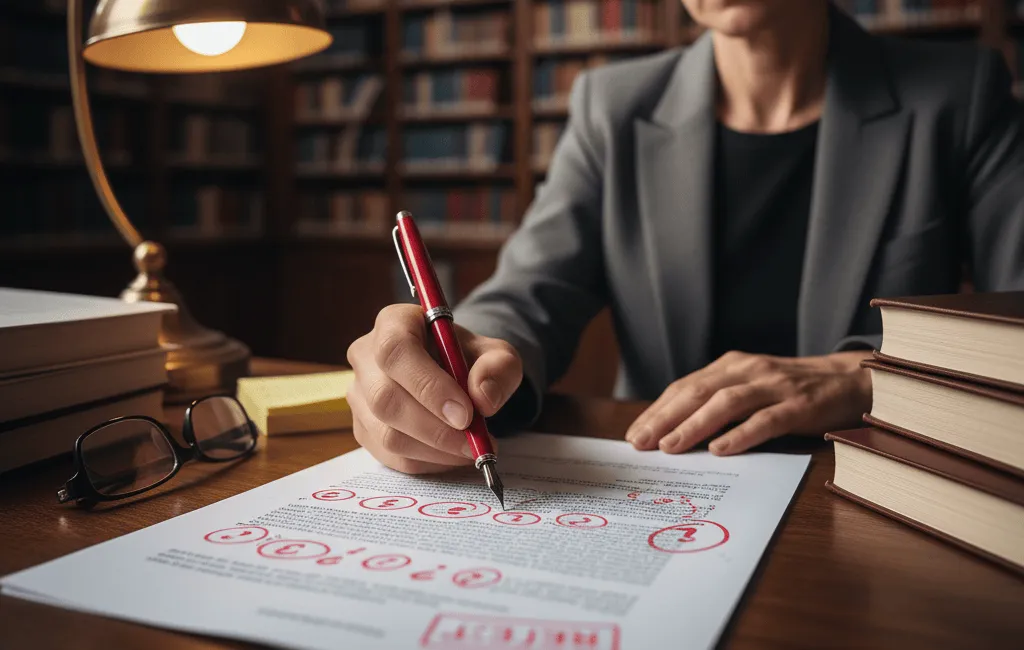
One of the most satisfying aspects of your academic life is submitting your research paper. However, that excitement soon fades away to disappointment among many authors when a journal editor returns a rejection not because of the poor quality of research, but due to preventable grammar and formatting errors.
The best research may face rejection if the manuscript does not comply with the technical and linguistic requirements of the journal. That is why Mars Publications underlines the necessity of Advanced Formatting Services and professional language editing, which will help to increase the chances of your paper acceptance.
In this guide, we are going to discuss the most widespread grammar and formatting mistakes that can easily result in rejection and how to prevent them to have a smooth process of submission.
1. Ignoring Journal Formatting Guidelines
The formatting requirements of each academic journal are unique and depend on the indexing of Scopus, Web of Science or Elsevier. These can be margin size, font style, line spacing, word count, sequence of sections and reference style.
A submission of a manuscript that does not follow these requirements is an indication of laxity to editors. It indicates that the author did not even bother to read or go through directions, which is an indicator of bad academic publication.
Example:
The journal requires the APA 7th edition, yet the author refers to MLA or Harvard style. This mismatch may result in desk rejection even the research is excellent.
How to fix it?
Hire Advanced Formatting Services such as Mars Publications to format your paper to the precise specifications of each target journal, including headings, captions, and reference styles.
2. Inconsistent Citation and Reference Styles
Wrong or improper citations are one of the leading causes of manuscripts rejection landing to the editors to revise. Common problems include:
- Lack of references in the bibliography.
- Changing the formats of the same paper.
- Punctuation, italics, and capitalisation errors in references.
- URLs or DOI numbers that are not complete.
- Such mistakes not only make your paper unprofessional but may also cast doubt on the accuracy of the research.
Note: It is always good to match in-text references with your reference list. The assistance of such tools as Zotero, Mendeley, or EndNote may be useful, yet human examination is necessary.
At Mars Publications, our Advanced Formatting Services department is staffed by hand to check each citation and reference to make sure that it is in the exact style guide of the journal.
3. Grammatical Errors That Undermine Credibility
The grammatical errors may have a great influence on the perception of your paper by the editors. Common problems include:
- Subject-verb disagreement.
- Misuse of articles (“a,” “an,” “the”).
- Mixed tenses in the description of methods or results.
- Sentences are long and indistinct, making them less readable.
Even small mistakes leave your ideas hard to concentrate on your ideas. Language nuances especially make non-native writers of the English language susceptible to these problems.
Solution: Have your paper checked by an academic editor who is proficient in English and knowledgeable about the standards of scientific writing. Mars Publications offers full grammar correction and proofreading under its Formatting Services to make your paper sound like a native.
4. Poorly Structured Abstracts and Introductions
The first sections that are read by the editors are the abstract and introduction, and in most cases, they determine whether to continue reading your paper or not.
Common issues include:
- Too long abstracts or too general abstracts.
- Lack of goals, procedures or outcomes.
- Introductions that have no background information or gaps in research.
An effective abstract must be short, informative and full of keywords. It should be clear in the introduction what is new about your work and why it is important.
Formatting hint: The abstracts usually have a limit of 150-250 words in journals. Be concise and do not use jargon.
Mars Publications assists in organising your abstract and introduction based on the expectations of the journal, but in a way that is easy to understand and read.
5. Misaligned Figures and Tables
Figures, tables and graphs are visual elements that make your paper easier to read, but only when formatted properly. Papers that are rejected by the editors usually include:
- Numbers are obscured, misnumbered or wrongly numbered.
- Tables are divided into pages or do not have captions.
- Information does not match the writing.
- Best practice:
- Be sure to include a number, title and source (where applicable) with each figure.
- Cite all figures or tables in the text before their occurrence.
- Be consistent in units and styles of formatting (font size, alignment, and line thickness).
Our Advanced Formatting Services at Mars Publications make sure that your images are journal-compliant, clear, and professional, which makes them easier to read and more effective.
6. Overuse of Passive Voice
Although passive voice is not entirely unsuitable in academic writing, excessive use of it results in wordy and lifeless sentences.
Passive: The experiment was conducted by the researchers.
Active: The researchers experimented.
The active voice tends to be more immediate and more interesting. Finding the golden mean enhances readability and maintains the attention of the reviewers.
Our editors at Mars Publications make the sentences as readable and impactful as possible without losing academic tone.
7. Incorrect Section Headings and Subheadings
All journals have a specific arrangement of sections, which is usually Introduction, Methods, Results, Discussion, and Conclusion (IMRaD). These may be lost or renamed, and this may confuse editors.
Formatting guidance:
- Have regular heading levels (e.g. H1, H2, H3).
- Do not make it too complicated with numerous subheadings.
- Do not use title case; use sentence case, unless necessary.
Mars Publications makes sure that the section hierarchy of the journal is completely adhered to, and the professional formatting is used to improve the readability and navigation.
8. Neglecting Language Polishing and Proofreading
Most of the authors are concerned with the quality of research and ignore language refinement. Manuscripts of poor writing, full of typing errors, repetitions, or ambiguous wording, are often rejected irrespective of the quality of the research.
Mars Publications has Advanced Formatting and Proofreading Services, which include:
- Correction of grammar and syntax.
- Uniformity of terms and technical expressions.
- Formatting according to journal submission systems such as ScholarOne or Editorial Manager.
- A polished paper is a sign of professionalism, and it will be more likely to be accepted in the first round of review.
9. Missing or Incorrect Metadata
Metadata (title, author names, affiliations, keywords, abstract) is very important in journal indexing and discoverability. In case of inconsistency of this information in the manuscript and the submission system, it may slow down or even prevent publication.
Make sure your keywords are search engine-friendly and search engine-relevant to increase your presence in indexing databases. Mars Publications offers metadata optimisation as an Advanced Formatting Service, which makes your paper more discoverable in search engine services such as Scopus, PubMed, and Web of Science.
10. Submitting Without a Final Quality Check
Even minor formatting inconsistencies, extra spaces, mismatched fonts, and incorrect references can lead to rejection. A final compliance check is essential before submission.
At Mars Publications, we perform a detailed pre-submission review covering:
- Formatting and layout verification.
- Grammar and style consistency.
- Reference accuracy.
- Metadata and figure labelling checks.
This ensures your paper meets both the editorial and technical requirements of your target journal.
Why Formatting and Language Quality Matters?

Editors receive hundreds of submissions. A clean, well-formatted, and grammatically correct manuscript communicates professionalism, attention to detail, and respect for academic standards. It also allows reviewers to focus on your research, not your errors.
That’s where Mars Publications’ Advanced Formatting Services come in. We bridge the gap between excellent research and perfect presentation, giving your paper the professional polish it deserves.
Conclusion
Journal rejection due to grammar or formatting errors is entirely avoidable. By partnering with Mars Publications, you ensure that your manuscript meets every academic, stylistic, and technical requirement, reducing the risk of rejection and accelerating acceptance.
From language editing and citation correction to layout formatting and meta data optimisationon, our Advanced Formatting Services are designed to give your paper a competitive edge in top-tier journals. So before you click “Submit,” make sure your paper reflects your hard work and the professionalism it deserves with Mars Publications’ Advanced Formatting Services.