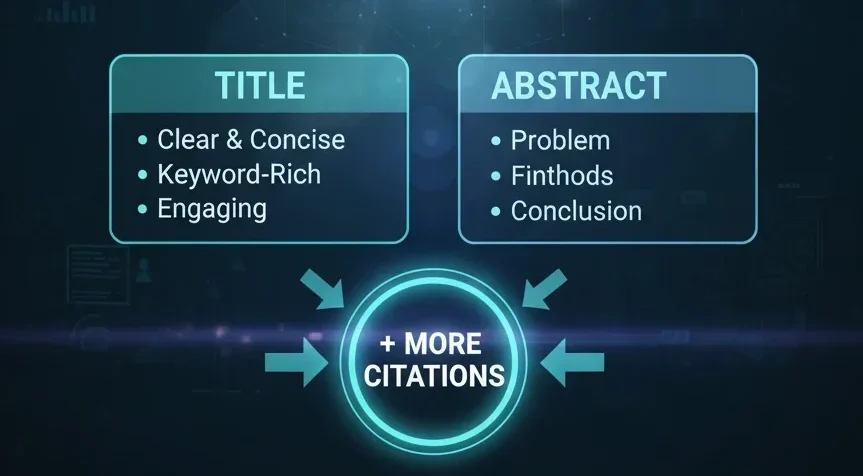
Scholarly writing has to compete to be visible in the academic publishing sphere. Before digging into the depths of the methodology or novel findings within a manuscript, reviewers, editors, and future readers examine that work using two important points: the title and the abstract.
These parts make up the first encounter of a paper; they act as the formalised introduction and the concise overview. They make the initial contact to journal editors, peer reviewers, and, in the second mention, the research community at large. Carefully optimise the title and abstract to improve discoverability. Professional supports, such as advanced formatting services, also help the researchers optimise their research paper. This blog can help by providing practical recommendations on how to make sure that those elements create a good and powerful first impression.
The Imposing Importance of Title and Abstract
The importance of these elements is ethos. A strong title draws the attention of a researcher upon a quick search through databases like Scopus, Web of Science or Google Scholar. The abstract will then convince the researcher to download, read, and reference the paper.
In addition, academic search engines and indexing databases use much of the text in the title and abstract to classify and bring up the work. A bad choice of keywords or misinterpretation of the language can make a manuscript practically invisible to the target audience. As a result, the strongest and most consequential findings can be ignored when their original presentations are poor.
Writing an Effective Title for the Research
1. Short but Descriptive: Do not use unnecessary words or phrases. Rather, describe the topic and discovery directly.
2. Include Key Keywords: Find out the most significant words that define the study. Putting them in the title implies the content to the readers and search engines instantly.
3. Balance Specificity and Appeal: The title should be specific enough to appeal to a general audience; it needs to be vague enough so as not to convey specific value. Do your best to maintain a balanced mining that is fine and interesting.
4. Limit Jargon use: The specialised terms that are specific to the discipline may be required. But the number of times obscure acronyms or specific jargon are used will limit the readership and discoverability.
How to write an Optimised Abstract
The abstract is a summarised, descriptive overview of the whole manuscript. The majority of journals expect a logical flow which would reflect the structure of the paper.
1. Problem: Have a very certain statement of the problem or knowledge gap under study.
2. Method: Concisely explain the methodology used (e.g., based on a multi-case study methodology, we used a multi-case study, or we used a randomised controlled trial, etc.)
3. Results: Describe the most significant results; this is the core of the abstract. Be precise and, where possible, provide important data points.
4. Significance: Sum up by outlining the implications and contribution of the work, defining its importance and contribution to the field.
Pro Tips for Abstracts
- Write to a General Scientific Audience: Put Clarity First. Keep the sentences short and simple, and the amount of technical jargon minimal to prevent turnover to other researchers.
- Always Respect Word Limitations: It is important to stick to journal guidelines. All the sentences have to consist of crucial data.
- Final sentence should end with Impact: It is the closing of the sentence which is significant to the study.
Discoverability: Keyword Strategy
In order to improve the discoverability, it is better to use the language of the target audience. Search engine optimisation in academic databases will need the strategic use of keywords.
1. Strategic Keyword Placement: The keys to strategic writing can be to place the majority of the keywords in the title and abstract; these divisions are the ones which are weighted by the search algorithms of search engines.
2. Keyword Research: You should not consider which keywords to employ. Examine keywords in widely read articles about related issues, explore the autocomplete field on Google Scholar by viewing existing queries, and visit a list of proposed keywords on the target journal.
3. Natural Integration: Weave keywords into the mark of the title and abstract. Unprofessional, clumsy keyword filling (e.g. “machine learning, deep learning, AI-based image classification) is punished by algorithms.
Common Mistakes to Avoid
- Keyword Overstuffing: A grocery list of keywords in a title or abstract kills the reader and comes off as spammy.
- Vague Language: Generic statements like this paper discusses some key issues are less persuasive; you need to make statements specific.
- Too Technical Language: An abstract that only people in a niche can understand hinders interdisciplinary interest.
- Clickbait Titles: Imagination is truly embraced, but clarity should never be compromised. A hidden or misleading title is going to be bypassed by researchers who are time-constrained.
Conclusion
The title, as well as the abstract, is not a political trick, but a powerful tool of academic communication. Even a small amount of time spent on polishing them can pay off significantly in visibility, readership and citations. They are entitled to be examined as closely as the rest of the manuscript.
A well-constructed title and a clear and concise abstract containing many keywords can help researchers not just get published, but also be found, read, referred to, and built upon by the entire scholarly community of the world.
We are committed to helping researchers maximise the impact of their work here at Mars Publications. We use our experience to perfect your manuscript, perfect your title and abstract, and steer you through the publication process to gain the exposure and fame that good research rightly deserves.