
The most acknowledged and indeed most discussed measure of academic publishing is the Journal Impact Factor (JIF). When the question is, What score is there to mean a good Impact Factor? They want a single, general number. Nonetheless, this question is not simple: having a good Impact Factor is fully dependent on the discipline. What one would regard as an excellent score in one subject may be an average score in another. This fact of the field is essential to all researchers and the basis of strategic publishing at Mars Publications.
Basic Impact Factor A Citation Ratio
Clarivate calculates the Impact Factor annually through the Journal Citation Report (JCR), determining how many times a journal article is cited in a given period.
The ratio is a mere computation:
JIF ( Year X) = Number of citable items published in (X-1) and (X-2)Citations of Year X to articles published in (X-1) and (X-2)
Researchers in the Social Sciences and in the Arts and Humanities in particular frequently cite books, monographs, and older literature rather than new journal articles. This practice results in much lower average JIFs. In this case, a publication with an Impact Factor of 1.0 can symbolise the highest order and is regarded as very respectable. Although this is a simple formula, the meaning of the score obtained should be subtle. Context is something we have to consider.
The Landscape of Field: The King is Context
The Impact Factor of a biomedical journal cannot be compared to that of a history journal. The citation cultures and publication rates differ tremendously across different disciplines and primarily determine the potential JIF range. These three categories need to be studied thoroughly in order to identify actual impact.
The High-Impact Fields (The Life Sciences and Medicine)
These disciplines include extensive research populations, similar turnover of experiments, and an ethos of instant and frequent reference. As a result, the JIF scores are also dramatically increased. The IF of 5.0 is good and may only qualify to rank in the Q2 (Second Quartile). A score of 10.0 and above indicates a very prestigious journal and the highest prestigious journals have a score of more than 50, sometimes more than 200. Scholars in such fields have to aim at extremely high promotion or tenure scores.
The Physical Sciences and Engineering (Mid-Range Fields)
Other sciences such as Chemistry, Engineering and Earth Sciences usually have smaller researched communities and have longer cycles of citation. The first two papers are not the only ones being cited over a period of many years. Generally, IF in these ranges of 2.0 to 3.0 means a well-regarded journal, and 5.0 to 7.0 might mean a journal would be safely in the Q1 (First Quartile) of its group. In this case, a moderate score will make a lot of weight.
Lower-Range Fields (Social Sciences and Humanities)
Researchers in the Social Sciences and in the Arts and Humanities in particular frequently cite books, monographs, and older literature rather than new journal articles. This practice results in much lower average JIFs. In this case, a publication with an Impact Factor of 1.0 can symbolise the highest order and is regarded as very respectable. We consciously recognise this disciplinary difference.
The Golden Rule should not be forgotten: You should never judge a journal only by its Impact Factor, comparing it only to other journals that belong to the same subject category. A journal with high marks in one area could appear low in comparison to another field with higher citation, however, its internal ranking would determine its real prestige.
Beyond the Score: A comprehensive View
Although the numeric Impact Factor offers a fast benchmarking tool, it is not safe to work with it only. More than a high JIF, a really good journal has to provide impact and relevance to your work.
Quartile Ranking (Q1, Q2, Q3, Q4)
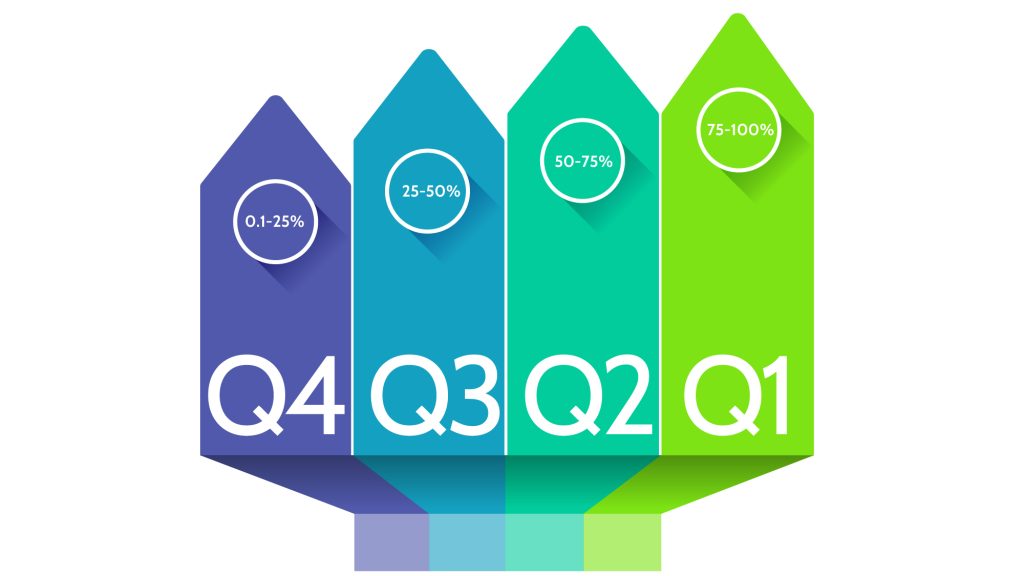
In practice, the Quartile Ranking is often a more objective, normalized quality measure of a journal in the field. JCR divides the journals into four equal proportions.
- Q1: The 25th percentile of the journals in a subject field. Publication in a Q1 journal is almost always a high-impact output meeting institutional requirements in spite of the number of JIF used.
- Q2: The second 25%. These are highly respectable and powerful journals which in most cases is the best fit in any specialized research and is faster to be published. Paying attention to Q1 status is an effective way of standardizing the notion of a good journal in various disciplines.
Other Metrics Matter
Wise researchers combine metrics in order to draw the complete picture of the impact of a journal:
- CiteScore: According to the Scopus data, the four-year citation-based metric provides a more long-term perspective compared to the two-year perspective that the JIF provides. This is a source of good stability.
- SCimago Journal Rank (SJR): This indicator is a weighted score of citations that relies on the prestige of the journal making the citation. Citation in a highly-ranked journal has more of the weight, not only the raw count, but in the form of influence.
- Audience of the Journal: Ask yourself whether your target community is being reached by the journal. A niche journal, which has lower IF and is more relevant in your area of specialization, will have a greater impact on your career than a general journal that has a high IF.
Your Strategy with Next Publishers
We eliminate the JIF obsession that fits no one at Mars Publications. Our team substitute it with strategic placement of journals. We not only analyse your research but we also fit you with a high JIF score, the most appropriate quartile and the most appropriate audience to your particular field.
We have your work placed in a journal that is, in fact, deemed good in your professional sphere, which will ensure that the work receives as much visibility as it can. It is not the number that one should be chasing; it is the calculated strategy.
Lightning Publications: Finding the Right Impact for Your Research. Today, we may consult with you strategically on your Mars Publications.