
You are a successful researcher who has undertaken a demanding research project. You scrupulously gathered the information, did complicated research and wrote a fine paper. Congratulations! Now the real work begins. Publication of your paper is only the beginning. In case you want your research to count, you should be an aggressive promoter. By applying these 5 simple tips you can maximize your academic output and multiply your number of citations dramatically.
Make the most of Your Title and Abstract to Discover
The most important point of access to scholarly literature is search engines. Your title and abstract need to be regarded as important marketing instruments. They act as an advert to the worldwide research community on your paper.
Begin by incorporating all the high-value keywords in your title. Be a researcher in your field. Which specific words will they enter into such databases as Google Scholar or Scopus? Make sure your title is clear on your approach, major finding, and the subject of your research.
Secondly, write an interesting abstract. It ought to be an independent, convincing overview of your work. Encompass all the key words and other subject terms used in the abstract in a systematic manner. This optimization will go a long way in enhancing the ranking of your paper in the search results. An easy to read and clearly laid out abstract will boost the amount of researchers who will now be willing to read your entire paper and you have a higher likelihood of a citation.
Take Advantage of Institutional and Professional Contacts
Do not use journal platforms only to distribute. It is advisable that you be very active in sharing your published work in all the available professional channels.
Make your paper available in your institutional repository as a pre-print or a post-print. Universities usually have a strong SEO and attract a lot of traffic. Post a reference to your paper in professional networking platforms, such as ResearchGate and LinkedIn. Write a brief and interesting status update that points to the most astonishing or significant outcome. Personally label collaborators and key experts in your field to instantly attract them.
You also need to utilize your personal network. Send a short message to the peers, past supervisors and the research groups that operate in similar fields through email. Instead of a standard mass mail, a customized message, telling how excited you are about the paper, and how important it will be, is much more effective. Selling your work to a specific audience is a fast method of gaining first reads and possible citations.
Offer Your Work at a Large number of Conferences and Webinars
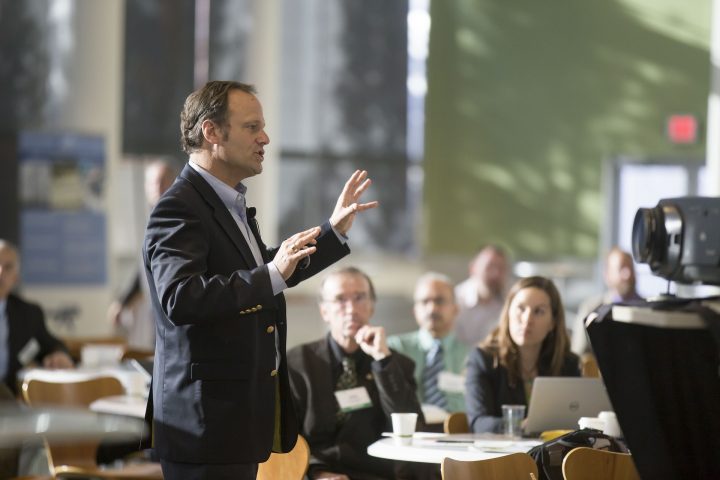
The oral presentation is one of the best methods to create buzz and interact directly with the possible future references. An effective presentation puts your work before an audience that is eager to receive new information.
Send abstracts to large conferences and other workshops in your area of expertise. Train on summarizing your findings into a well-defined and concise story, thus, emphasizing the main finding. You can participate actively in the question and answer session by asking and volunteering questions and providing your manuscript or supplementary data.
Ask about a free webinar or providing an academic department with a virtual guest lecture. These presentations can be recorded and posted to such sites as YouTube. Do not forget to place a direct link to your published paper in the description of the video. This plan transforms a single presentation to an irrevocable, searchable promotional tool.
Produce User-Friendly, Non-Technical Content
Your work is something that has a great value beyond the academic community. Get more people engaged by making your technical discoveries more accessible and engaging more broadly and to the media.
Compose a simplified blog post of the key conclusions of your paper to your university news site or a newspaper in the industry. Get to the point of your research by thinking about the implications on the real world, in simple language with less complex language. You may as well prepare an interesting infographic or video abstract that will effectively convey your methodology and findings.
Pitch to science reporters or university public relations departments. They are familiar with how to form a story that will appeal to a non-specialist audience. Greater media attention attracts the attention of policymakers, practitioners and researchers who are not necessarily in your immediate sub-discipline, who, in the long run, might end up referencing your work. Mars Publications also provides niche Journal Submission Services, which also encompass media outreach of high-impact papers.
How to Self-cite Yourself Strategically
The responsible self-citation is a valid and an obligatory part of a full Publication strategy services plan. You have to fit in your new paper in the right context of your already available body of work.
You should remember to reference your new publication appropriately in the future in conference presentations and grant applications. Conduct a systematic review of your current manuscripts and pre-prints. Speaking about some inaugural information or approach that was laid down in your new article, you should not omit an adequate reference.
Qualify opportunities in your next review articles or book chapters. Such kinds of publications usually present an overview of this material in detail and attract a large number of citations, of course. It is also possible to substantially increase the presence of your original research in these high-traffic secondary publishers by correctly positioning it within them. Never forget to make sure that your self-citations contribute some real academic value to the context.
Through these proactive measures of using the five strategies, you no longer sit and wait till you get cited. You are an active participant in establishing a way of exploration by other scholars in order to read and appreciate you have made an important contribution in the field. Make the most of your professional influence.
Are you just about to take your research into the international limelight? Mars Publications make your manuscript a citation magnet.