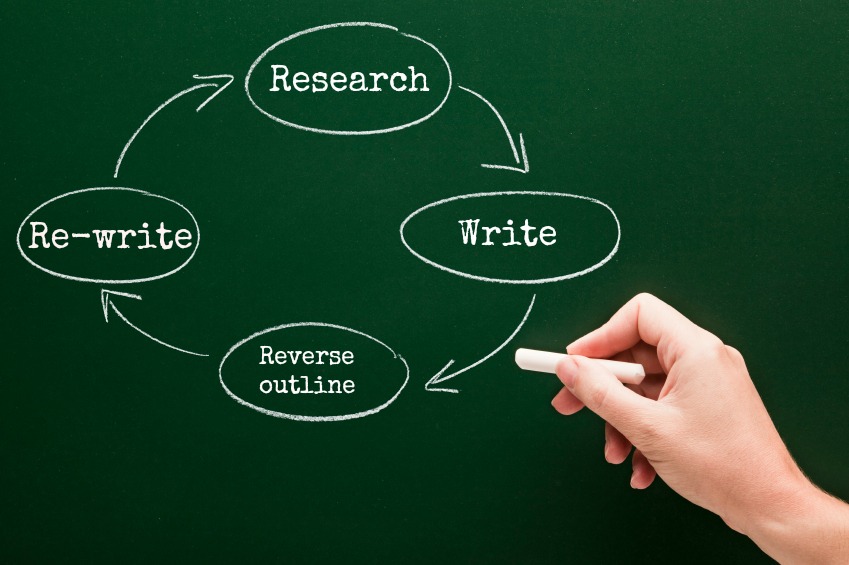
The process of analysis of preliminary data and the final paper is complicated. You have spent so much time doing your research and you require a finished product that not only is structurally sound, logically coherent and flawlessly persuasive.
Mars Publications deals with the last phases of critical writing of research papers. We do not only proofread, we will give you thorough editorial and structural feedback on how to make your arguments flow smoothly, how your evidence can back up your arguments and that your story is air tight. We also polish your manuscript using sophisticated methods such as the reverse outline.
How Mars Publications Can Bring Your Manuscript to the next level
- Logic and Flow Analysis: We are extremely careful about the logic between the introduction and body paragraphs and the conclusion, and make sure that each part of the paper has a distinct purpose.
- Structural Integrity: The editors of our company employ the best practices in order to check the structure of your paper to ensure a coherent flow of ideas that will attract your reviewers.
- Targeted Journal Readiness: We prepare your research in its specific requirements of the journal of your choice, with emphasis on clarity, academic tone and conformity in order to maximise its chances of acceptance.
All researchers are aware of the difficulty of making complicated concepts and arranging them into a sensible, convincing research article. A forward outline enables you to plan on how to write, but on the other hand, the reverse outline is that technique that is very important after you have completed your paper. This effective device draws your attention out of what you are going to write to what you have written. You use the reverse outline to ensure that the logic, flow and structure of your final manuscript is thoroughly checked. This is an important step; this will make each part and paragraph meaningful to your main argument.
What is a Reverse Outline?
Reverse outline involves the making of a new outline based on an old outline. You never look at your original plan. Rather, you break down your paper bit-by-bit and paragraph-by-paragraph. You identify the paragraph head, or topic sentence of each paragraph and write it down. At the end, you have a new and clear outline which is really an indication of the content and structure of your manuscript. This creates the necessity of viewing your work through the lens of an editor, and not the writer.
Construction of a Reverse Outline
A reverse outline is the easiest and most effective to make. There are three major things that you do with each individual paragraph of your draft:
- Find the Topic: You decide about the main idea or the most important purpose of the paragraph. You put this thought in a single, succinct sentence.
- Record the Evidence: You determine the supporting evidence in that paragraph (e.g. data, quotations, examples, or specific references to literature).
- Check the Connection to the Thesis: You momentarily mention how the main idea in this paragraph directly broadly relates or correlates to the main thesis statement or research question of your paper.
You then bring such notes together in a different document. You do not re-read your whole paragraph; you only pick out the essence of it. As an illustration, when you consider a paragraph in your Discussion section, your notes may appear as the one below: Main Idea: Discusses how the findings contradict the work of Smith (2020). Evidence: Comparison of statistical results (p-values). Connection to Thesis: narrows down the general theory base.
Checking for Logic and Flow

When you have built the reverse outline, you have a view, like no other, of the architecture of your paper. It is on this outline that you now undergo a series of critical checks on your Research Paper Writing.
Determine Gaps and Redundancy
- Check for Gaps: Revise your flow of main ideas. Do you find any sudden leaps of thought? When the outline skips too much on topic A to go straight to topic C by skipping topic B, then you have found a structural gap in your argument. You must write a transition or a new paragraph in order to cover the missing logical step.
- Find Redundancy: Search the repeated ideas. In case two or more of the entries next to each other in your outline have the same exact main thought, then you will have duplication of paragraphs. You have to add or remove the weaker paragraph. You make sure that each paragraph has its special, necessary purpose.
Determine Coherence and Transition
- Your Evaluation Flow: You read the reverse outline in a story. Is there a logical flow of one point to the other? In chronological order your main ideas must make a coherent story, which leads ineluctably to your conclusion. In case the flow is choppy, you will have to reread the transition sentences between the things you have written in between paragraphs in the draft version.
- Confirm Sentence Strength of Topics: The key point that you have determined about each paragraph is that it is the actual, controlling point. When a paragraph has a good idea and the evidence that you have taken is weak or does not relate to the paragraph idea, then you have a flawed internal logic paragraph. You will have to paraphrase the topic sentence or change the supporting evidence.
Confirm Thesis Support
Make sure there is Alignment: Review the notes you made concerning the “Link to Thesis.” Each and every paragraph in your paper except those that are solely descriptive such as the Methods should add to either supporting, refuting, or contextualizing your main argument. When the paragraph is not clear concerning its relation to the thesis, you will need to either emphasize the connection between the paragraph and the thesis or you can think of dropping the paragraph altogether.
With the reverse outline by Mars Publications, you are able to exercise structural discipline on your paper. You take a draft that seems right and make a final manuscript that is probably right. It is the most effective and active-voice editing method that will ensure your Research Paper Writing is logically flowing and structurally perfect.