
Completing a thesis is a major milestone, but its real impact begins when the research reaches a wider academic audience. One of the most effective ways to share your findings is by publishing them as a Scopus-Indexed Journal Article. Scopus remains one of the most respected databases in the academic community, and having your work indexed there enhances both visibility and credibility. However, transforming a thesis into a publishable article is not a simple copy-and-paste exercise, it requires focused refinement, strategic positioning, and strict adherence to journal requirements.
At Mars Publications, we specialise in guiding researchers through this process, ensuring that your thesis not only evolves into a high-quality manuscript but also meets the exacting standards of Scopus-indexed journals.
Understanding the Difference Between a Thesis and a Journal Article
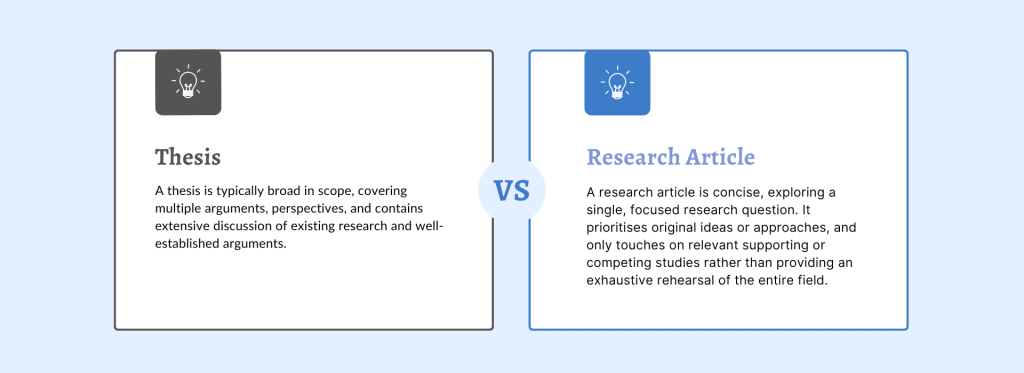
A thesis is often comprehensive, running into hundreds of pages and covering every detail of your research journey. A journal article, by contrast, is concise and structured to highlight key findings. Scopus-indexed journals demand manuscripts that are:
- Focused – targeting a single research question or contribution.
- Concise – typically 5,000–8,000 words instead of an entire thesis.
- Formatted – in line with strict journal submission guidelines.
- Original – presenting significant contributions rather than a broad survey.
Recognising these differences is the first step toward successful conversion.
Key Steps in Converting Your Thesis
1. Identify the Core Contribution
Your thesis may explore multiple questions, but an article should highlight one main contribution. Select the most original, significant, and publishable finding.
2. Reframe the Structure
Restructure your writing to follow the IMRaD model,Introduction, Methods, Results, and Discussion. This is the standard expected in Scopus-Indexed Journal Articles.
3. Reduce Literature Review
Theses often have extensive reviews. For a journal article, condense this to focus only on recent and relevant studies that directly frame your research question.
4. Strengthen Methodology and Results
Scopus-indexed journals place strong emphasis on rigour and reproducibility. Ensure your methods are clearly explained and your results are presented with precision.
5. Edit for Clarity and Style
Academic writing for journals requires conciseness and sharpness. Removing repetition, tightening arguments, and improving readability are crucial.
6. Meet Formatting Standards
Each journal has specific submission guidelines, from citation style to figure formatting. Non-compliance is a common reason for desk rejection.
Why Scopus-Indexed Journals Matter

Publishing in a Scopus-indexed journal is not just about prestige. It offers tangible benefits:
- Increased visibility – Your research is accessible to a global audience.
- Academic recognition – Scopus-indexed publications are highly valued for career progression and funding applications.
- Credibility – Being indexed means your work meets rigorous peer-review standards.
- Citations and impact – Indexed papers often achieve higher citation rates, amplifying research influence.
For young scholars especially, a Scopus-Indexed Journal Article can significantly enhance academic profiles.
Common Challenges Researchers Face
Transforming a thesis into a publishable article is challenging because:
- Theses are often too lengthy and unfocused for journal standards.
- Researchers struggle with condensing large amounts of data.
- Manuscripts are rejected for not following journal submission requirements.
- Language, style, and structure may not meet international publishing expectations.
This is why many researchers seek professional journal submission support to increase their chances of acceptance.
How Mars Publications Supports the Conversion Process?
At Mars Publications, we provide comprehensive services tailored for researchers aiming to publish in Scopus-indexed journals. Our approach includes:
- Manuscript Assessment – We evaluate your thesis and identify the strongest parts for conversion.
- Restructuring Support – Our editors reframe content to match journal article requirements.
- Language and Technical Editing – Ensuring clarity, accuracy, and professional presentation.
- Formatting Compliance – Aligning with the journal submission guidelines of your chosen Scopus journal.
- Resubmission Support – If rejected, we assist in refining and resubmitting your article strategically.
With expert editorial and technical guidance, your research is prepared to stand out in a competitive publishing environment.
Tips to Improve Acceptance Chances
- Choose the right journal – Target a Scopus journal aligned with your subject area and methodology.
- Highlight novelty – Make clear what your research adds to the field.
- Follow ethical guidelines – Avoid plagiarism and duplicate publication.
- Seek peer feedback – Supervisors or colleagues can identify gaps before submission.
- Revise based on reviewer comments – A well-considered response can turn rejection into acceptance.
Final Thoughts
Converting your thesis into a Scopus-Indexed Journal Article is not just about shortening a document,it’s about reshaping it to meet the highest academic standards. With careful selection of core findings, precise restructuring, and compliance with submission rules, your work can transition from a closed academic document into a widely recognised contribution.
At Mars Publications, we help bridge this gap by providing research publication support that ensures your work meets the expectations of top-tier journals. By guiding you through every stage, from manuscript preparation to journal submission, you gain more than just a publication; you secure a stronger academic presence.
Publishing in Scopus is competitive, but with the right strategy, your research can achieve the recognition it deserves.